

[Latest] Multilingual Strategy to Eliminate Near-Misses: High-Accuracy Translation of Safety and Health Management Plans via LLMs
As the ratio of foreign workers at construction sites rapidly increases, the most serious challenge is the risk of occupational accidents due to "language barriers" [1]. Conventional machine translation has struggled to accurately convey site-specific terminology and context-dependent safety instructions found in Japan-specific documents such as "Construction Procedure Manuals" and "Health and Safety Management Plans." In this article, we will explain a next-generation multilingual strategy that combines LLMs (Large Language Models) and RAG (Retrieval-Augmented Generation) to fundamentally eliminate "near-miss" incidents caused by mistranslation.
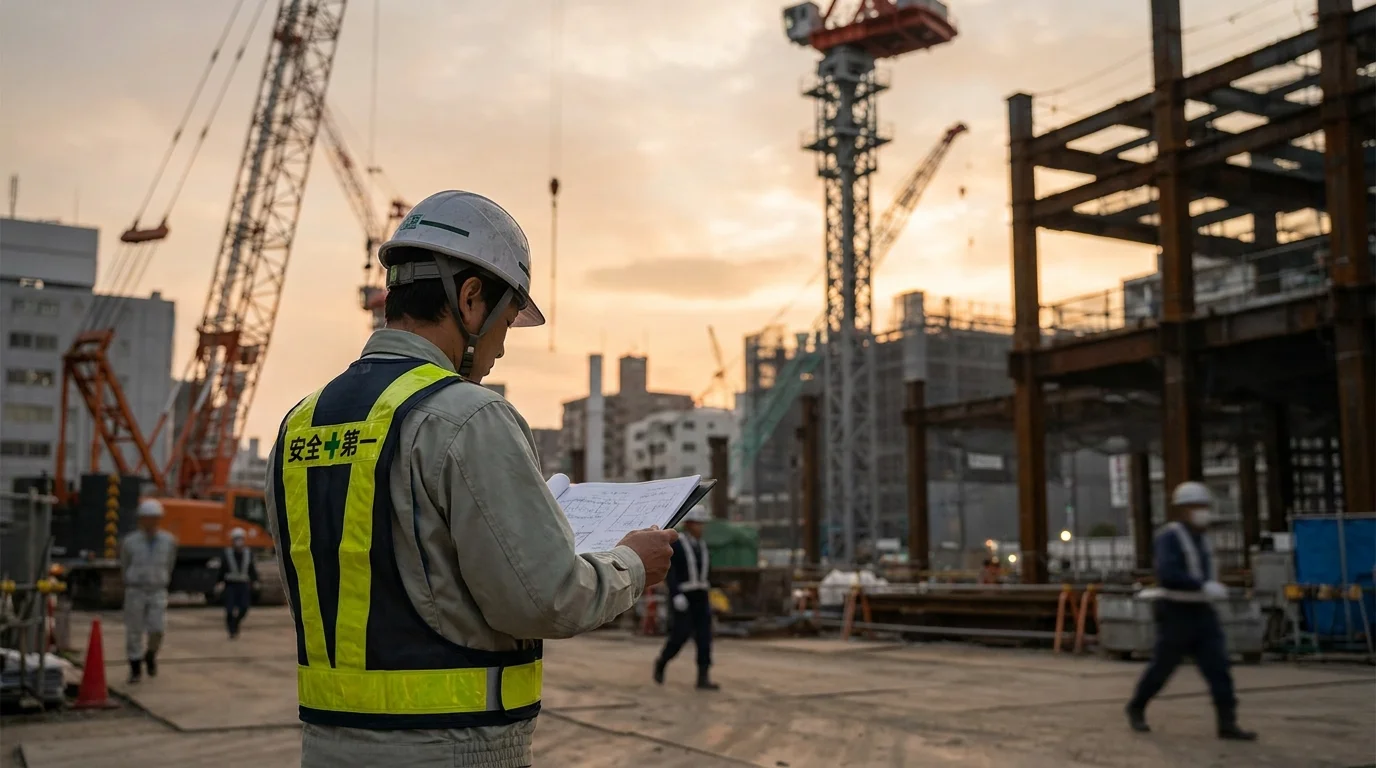
Table of Contents (Click to expand/collapse)
- 1. Limitations of Conventional Translation and the Barrier of Field-Specific Terminology
- 2. Improving the Accuracy of Safety Management Plans through RAG
- 3. Implementation flow for qualitatively transforming KY activities for foreign workers
- 4. Quantitative Evaluation of Risk Reduction Effects through Implementation
1. Limitations of Conventional Translation and the Barrier of "Field-Specific Terminology"
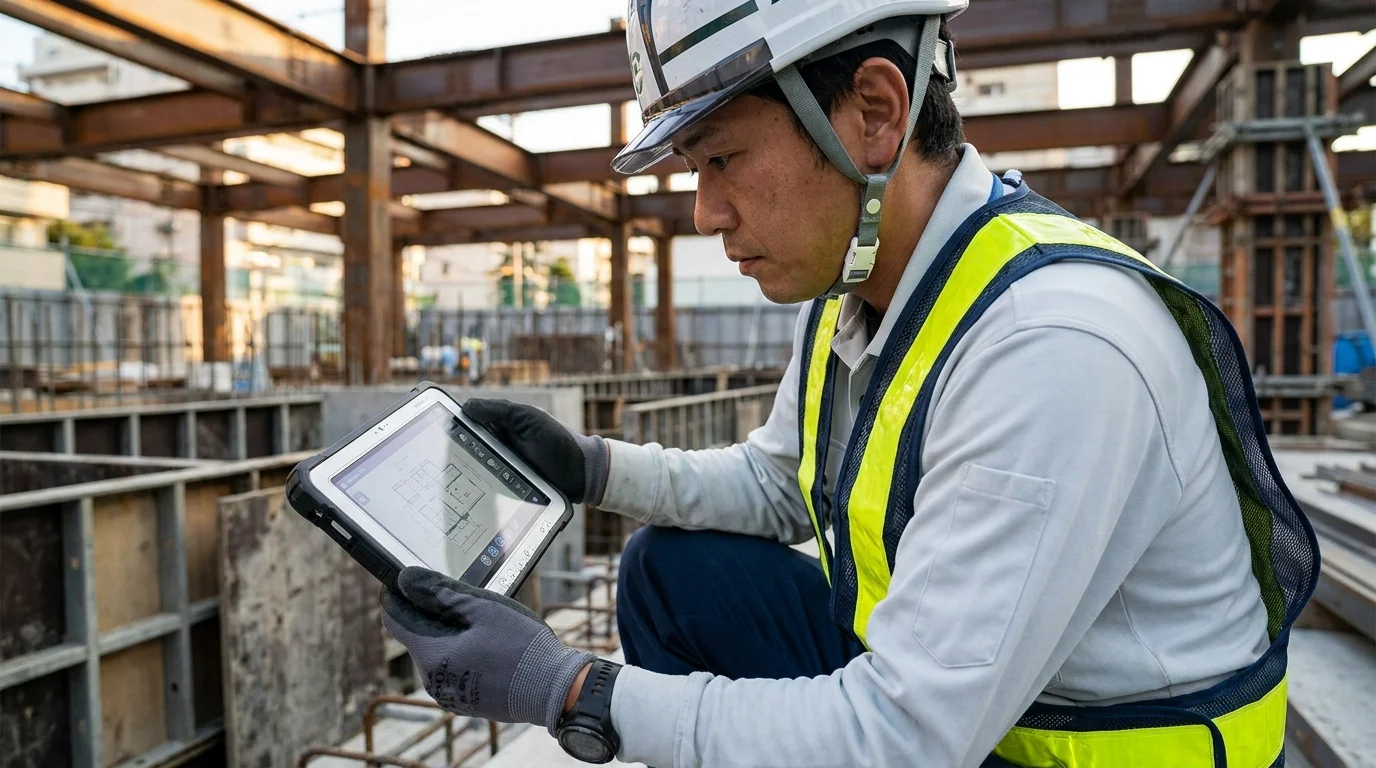
On construction sites, specialized terms not found in standard dictionaries—such as "tateire-naoshi," "aiban," and "engiri"—frequently appear. Running these through standard translation engines often results in literal translations that ignore context, leading workers to follow incorrect construction procedures. In particular, misinterpreting instructions in safety and health management plans creates "information discrepancies" that can lead directly to serious accidents.
2. Enhancing the Accuracy of Safety Management Plans Leveraging RAG
In the latest AI strategies, rather than simply having an LLM translate, we incorporate **RAG (Retrieval-Augmented Generation)** [2]. By creating a database of a company's past construction records, glossaries, and safety manuals and having the AI refer to them during translation, we ensure the selection of appropriate terminology tailored to the field. As a result, translation accuracy has improved dramatically compared to conventional machine translation.
Upgrade your workplace safety with AI?
We propose strategies to eliminate communication loss with foreign workers and achieve zero-accident construction sites.
Talk to us for a free strategy consultationSummary
Multilingualization of construction sites is not merely a welfare benefit, but a "safety investment" to avoid management risks. By utilizing high-precision translation combining LLM and RAG to ensure the true intent of construction manuals is understood by all workers, near-miss incidents can be dramatically reduced. Overcoming the "language barrier" through technology will be the most critical challenge in future construction DX.
Published: May 22, 2024 / By: Osamu Yasuda

Related Articles


References
- [1] Ministry of Health, Labour and Welfare, "Safety and Health Management of Foreign Workers in the Construction Industry"
- [2] OpenAI「Retrieval-Augmented Generation for Knowledge-Intensive NLP Tasks」