

[2026 Latest] Optimizing AI-OCR Structured Extraction and Deep Learning-Based Account Item Inference for Non-Standard Documents
In the digital transformation (DX) of accounting operations, "automation of invoice entry"—once the biggest bottleneck—is reaching a major turning point as of 2026. For a wide variety of non-standard documents that were difficult to handle with conventional template-based OCR, approaches combining Large Language Models (LLMs) and deep learning are achieving accuracy and speed that surpass human capabilities. This article provides a professional perspective on the latest technical trends, from the structured extraction of invoice information to the optimization of account item inference based on advanced context understanding.
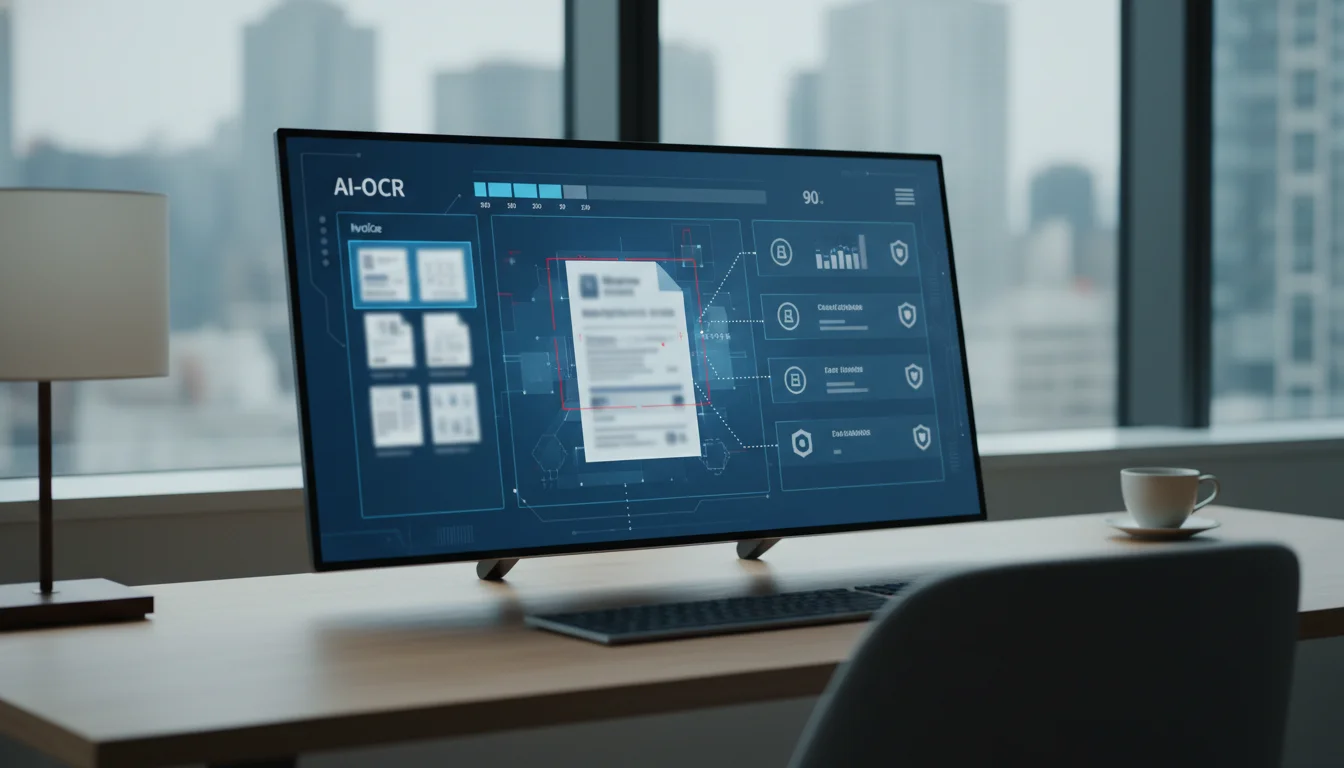
1. Moving Beyond Coordinate Dependency: Structured Extraction in Non-Standard OCR
Conventional OCR technology primarily relied on template methods that defined "where on the paper" specific items were located. However, maintaining thousands of patterns for invoices with different layouts for every supplier is not realistic. Modern AI-OCR utilizes Vision-Language Models (VLM) to identify items based on "meaning" rather than coordinates.
This technology has made it possible to accurately extract not only invoice header information (issue date, registration number, total amount) but also multi-line item details (description, unit price, quantity, amount by tax rate) as structured data (such as JSON format). Even with the complex tax calculations introduced after the start of the Invoice System, the AI judges the context to assign the appropriate tax category.
Take Your Company's Accounting DX to the Next Level
We propose strategies for operational efficiency through the implementation of the latest AI-OCR and automated journal entry engines.
Talk to us for a free strategy consultationSummary
In 2026, invoice processing automation has evolved from simple "character recognition" to "advanced contextual understanding and reasoning." The combination of accurate structured extraction via unstructured OCR and deep learning models utilizing historical journal entry data has the potential to reduce accounting workloads by up to 80% or more. Understanding the technology correctly and building appropriate feedback loops will be the core of future back-office strategies.
Published: May 27, 2026 / By: Osamu Yasuda

Related Articles

References
- [1] Deep Learning for Document Image Analysis, 2025 IEEE Conference.
- [2] Natural Language Processing in Financial Accounting: A Review, Journal of Business DX 2026.