

[2026 Latest] Digitalizing the "Tacit Knowledge" of Expert Dispatchers: Standardizing Delivery Planning with VRP Algorithms
In the logistics industry, dispatch operations have long relied on the "experience and intuition of experts." However, due to labor shortages following the "2024 Problem" and the diversification of delivery needs, person-dependent operations are reaching their limits. This article explains specific strategies for utilizing AI-driven automated delivery route optimization (VRP: Vehicle Routing Problem) to digitalize veteran tacit knowledge and integrate it into standardized workflows.
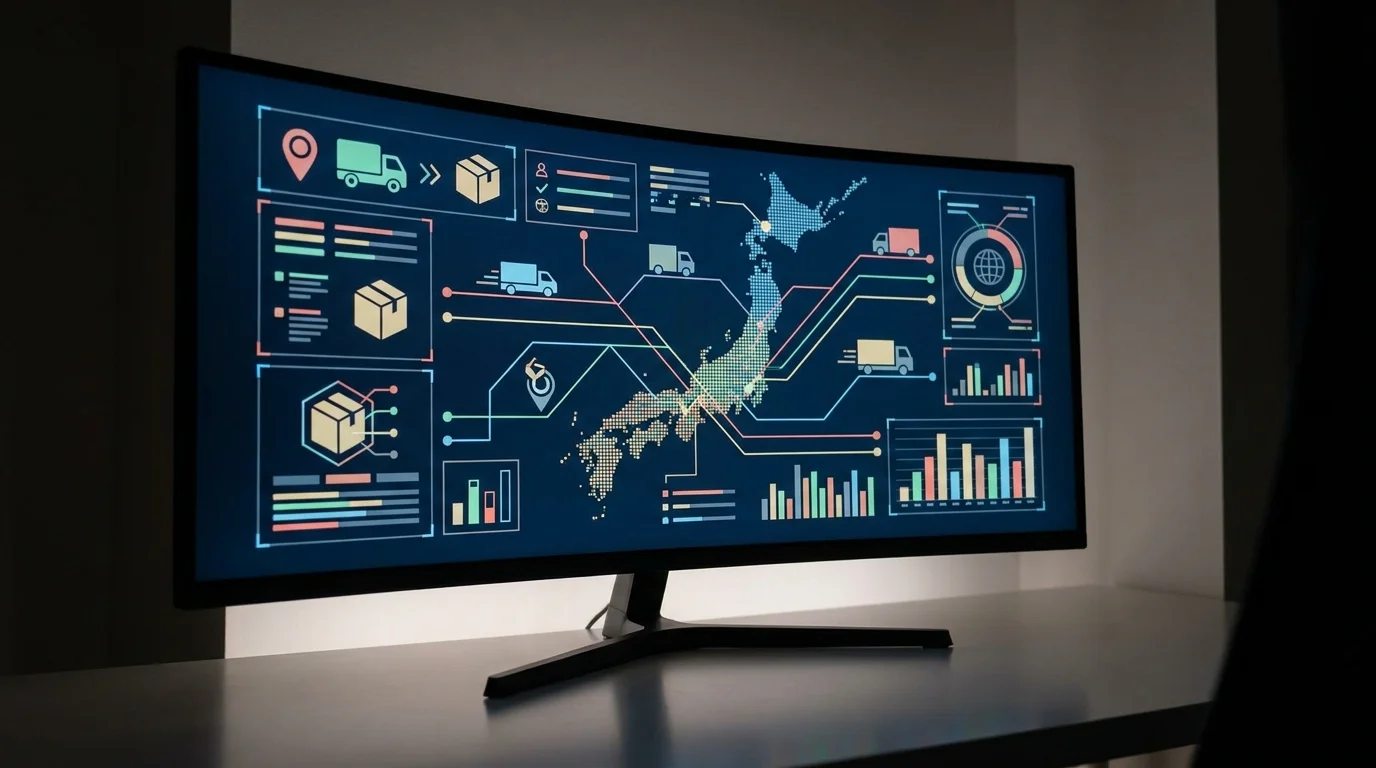
Table of Contents (Click to expand/collapse)
1. Breaking Down the "Minds" of Expert Dispatchers Using MECE
Veteran dispatchers do more than just calculate the shortest distance. They instantaneously process vast amounts of unstructured data, such as: "This destination is specified for morning delivery, but they can't receive goods until after 10:00 AM," "Large vehicles cannot pass through this road," or "This driver works well with a specific shipper."
The first step in digitalizing these factors is organizing variables using the MECE (Mutually Exclusive, Collectively Exhaustive) principle. In addition to physical constraints such as vehicle specs, time windows, driver labor regulations, and road restrictions, we extract shipper-specific rules as parameters. This makes it possible to convert "invisible rules" into computable data.
2. The "Combinatorial Optimization" Barrier Solved by VRP Algorithms
Mathematically, selecting delivery routes is known as the "Vehicle Routing Problem (VRP)," a complex challenge where the number of combinations increases exponentially as the number of destinations grows. Modern AI-powered VRP solutions use advanced algorithms like metaheuristics to derive near-optimal solutions from tens of thousands of patterns in just a few minutes.
Taking your logistics DX to the next level
We offer concrete strategies leveraging AI to eliminate individual dependency in dispatch operations and dramatically reduce delivery costs.
Talk to us for a free strategy consultationSummary
The core of Logistics DX lies in how we convert the "tacit knowledge" of experts into "explicit knowledge" and amplify it through technology. Automated delivery route optimization using VRP algorithms is more than just an efficiency tool; it is a powerful asset for overcoming the "2024 logistics crisis" and building a sustainable supply chain. By organizing constraints in a MECE manner and establishing a data-driven decision-making flow, let's achieve a resilient logistics system free from individual dependency.
Published: June 10, 2026 / By: Osamu Yasuda

Related Articles


References
- [1] Toth, P., & Vigo, D. (2014). Vehicle Routing: Problems, Methods, and Applications.
- [2] Ministry of Health, Labour and Welfare "Standards for Improvement of Working Hours, etc. for Automobile Drivers (Improvement Standards Notification)"