

[2026 Latest] Compliance with the Amended Electronic Books Preservation Act: A Strategic Roadmap for Achieving STP (Straight-Through Processing) via AI-OCR
Following the end of the grace period for the Electronic Books Preservation Act in January 2024, Japanese accounting departments are now at a turning point, moving from mere "digitization" to "full automation." Of particular note is the achievement of STP (Straight-Through Processing) through the integration of AI-OCR (Artificial Intelligence-based Optical Character Recognition) and accounting systems. In this article, we provide a detailed explanation of a strategic roadmap for completing the process from invoice receipt to journal entry without human intervention, while complying with legal requirements.

Table of Contents (Click to expand/collapse)
- 1. The Essence of "Accounting DX" Beyond Compliance with the Electronic Books Preservation Act
- 2. Mechanisms of Automated Journaling via AI-OCR and Strategies for Improving Accuracy
- 3. A Three-Step Implementation Roadmap for Achieving STP
- 4. Optimization of Human Capital: Business Process Re-engineering (BPR)
1. The Essence of "Accounting DX" Beyond Compliance with the Electronic Books Preservation Act
For many companies, compliance with the amended Electronic Books Preservation Act tends to be a defensive posture focused on "fulfilling storage obligations." However, the true objective lies in eliminating analog paper culture and maximizing the speed of data flow.
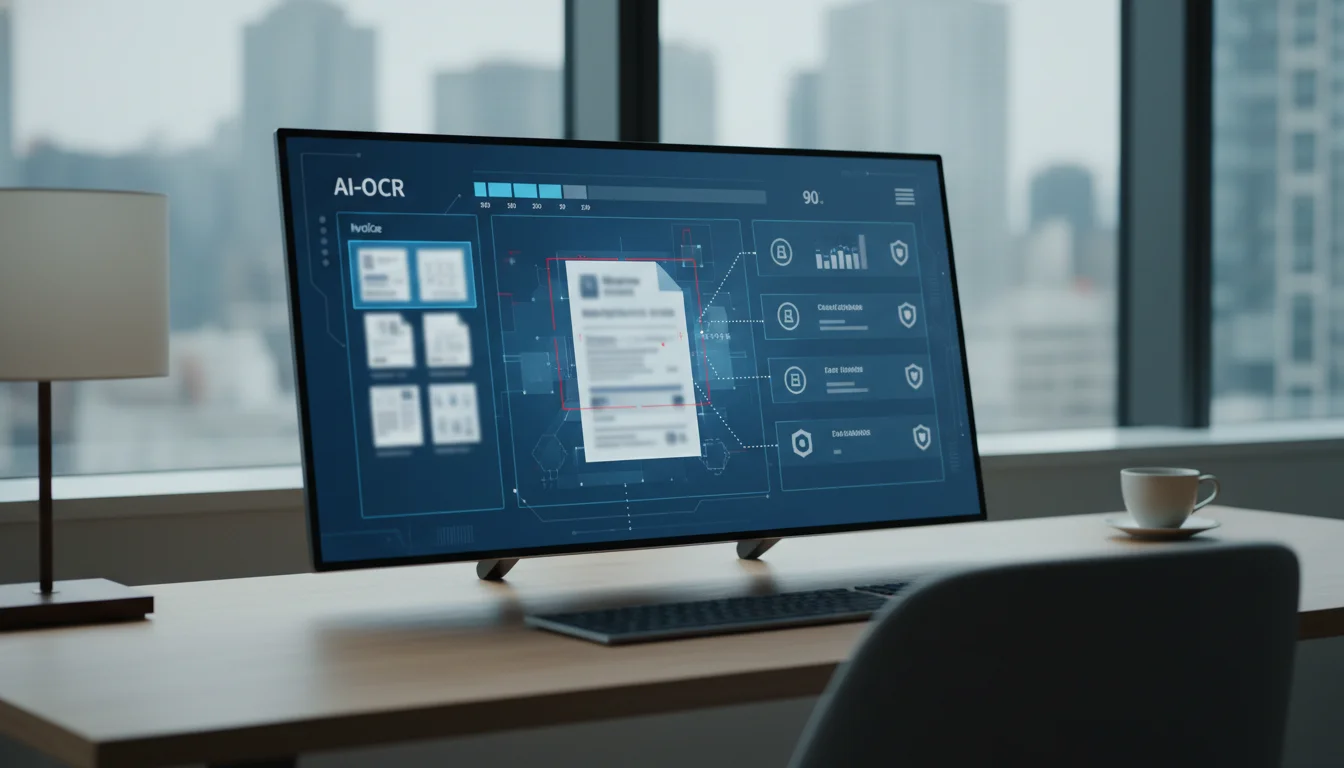
In traditional accounting operations, there was a "double effort" involved in visually checking the contents of received invoices and manually entering them into accounting software. By introducing AI-OCR, it becomes possible to automatically extract dates, amounts, vendors, and registration numbers (for the Invoice System) from non-standard forms and structure them as data.
Accelerate Management through Back-Office Automation
We provide end-to-end support from AI-OCR implementation to Electronic Bookkeeping Act compliance and BPR.
Talk to us for a free strategy consultationSummary
Looking toward 2026, the future of accounting lies in "automated data circulation" with AI-OCR as the hub. Rather than treating compliance with the revised Electronic Bookkeeping Act as a mere legal obligation, next-generation back offices require a strategic perspective that links compliance to overwhelming operational efficiency through STP (Straight-Through Processing) and the reallocation of human capital. Start by visualizing your company's document workflows.
Published: June 10, 2026 / By: Osamu Yasuda

Related Articles


References
- [1] National Tax Agency, "Q&A on the Electronic Bookkeeping Act (Latest 2024 Edition)"
- [2] Japan CFO Association, "Survey Report on the Status of DX Promotion in Accounting Departments"