

[2026 Latest] How 1:N Authentication Transforms Event Reception Agility: A Paradigm Shift Toward Zero Wait Times
In large-scale conferences and exhibitions, "reception congestion" is an unavoidable challenge. Traditional check-ins via QR code presentation or business card exchange suffer from accumulated time lags of several seconds as attendees operate their devices, creating critical bottlenecks during peak hours. The solution that addresses this issue at its core is the AI-driven 1:N (one-to-many) facial recognition system. In this article, we will provide a professional perspective on how the latest facial recognition technology in 2026 dramatically improves the mobility of event operations, explaining its mechanisms and the benefits of implementation.
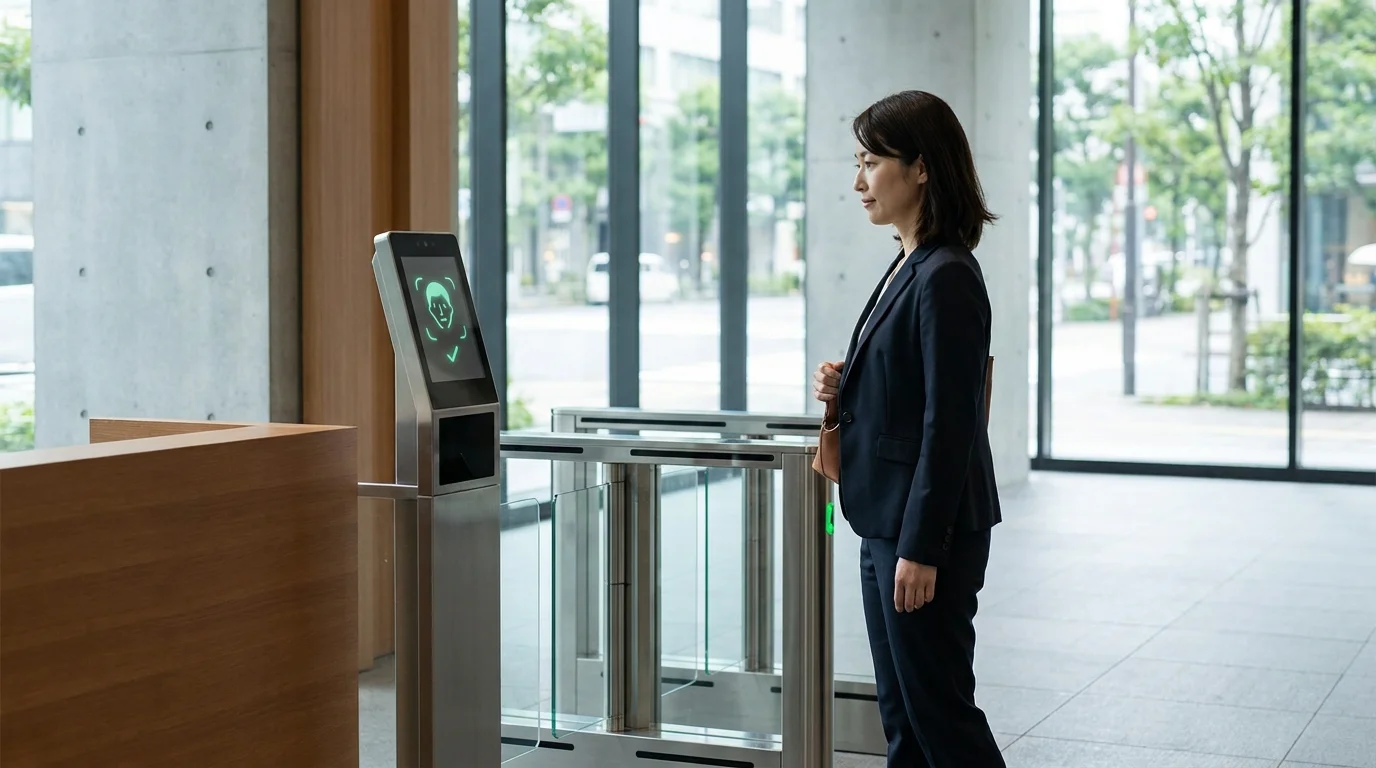
Table of Contents (Click to open/close)
- 1. The Crucial Difference Between 1:N and 1:1 Authentication: Impact on Event Management
- 2. Throughput Maximization Mechanism: Data on 85% Wait Time Reduction
- 3. Overcoming Technical Barriers: FRR (False Rejection Rate) and Optimization of Lighting Environments
- 4. 2026 Outlook: OMO Event Experiences Powered by Facial Recognition
1. The Crucial Difference Between 1:N and 1:1 Authentication: Impact on Event Management
Facial recognition technology is broadly categorized into two types: "1:1 authentication" and "1:N authentication." While 1:1 authentication verifies identity after a user presents an IC card or smartphone, the true breakthrough for event check-ins is 1:N authentication. This technology instantaneously identifies individuals captured by the camera from a vast database of pre-registered attendees.
The greatest advantage of this method is that it enables a "walk-through" experience. Visitors do not even need to stop; check-in is completed simply by passing in front of the camera. This eliminates the "friction" of physical contact and device operation, dramatically enhancing the mobility and efficiency of the reception area.
2. Throughput Maximization Mechanisms: Data on 85% Reduction in Wait Times
How much of an impact does the implementation of 1:N authentication have on actual event operations? According to our analytical data, while traditional QR code check-ins took an average of 15 seconds per person, the 1:N facial recognition walk-through method reduces the effective processing time to less than 2 seconds.
Realizing Next-Generation Event Management with AI Face Recognition
From zero-wait reception design to visitor behavior analysis. We support your event DX.
Talk to us for a free strategy consultationSummary
1:N face recognition systems are solutions that eliminate bottlenecks in traditional reception operations and maximize the mobility of event receptions. Dramatic improvements in throughput, optimization of FRR, and scalability for OMO experiences. The implementation of these latest technologies will become a standard competitive advantage in event management from 2026 onwards. The paradigm shift toward zero waiting time has already begun.
Published: June 4, 2026 / By: Osamu Yasuda

Related Articles



References
- [1] NIST (National Institute of Standards and Technology) Facial Recognition Technology Evaluation 2024
- [2] ITU-T X.1080.1: Biometric Access Control Systems Framework